
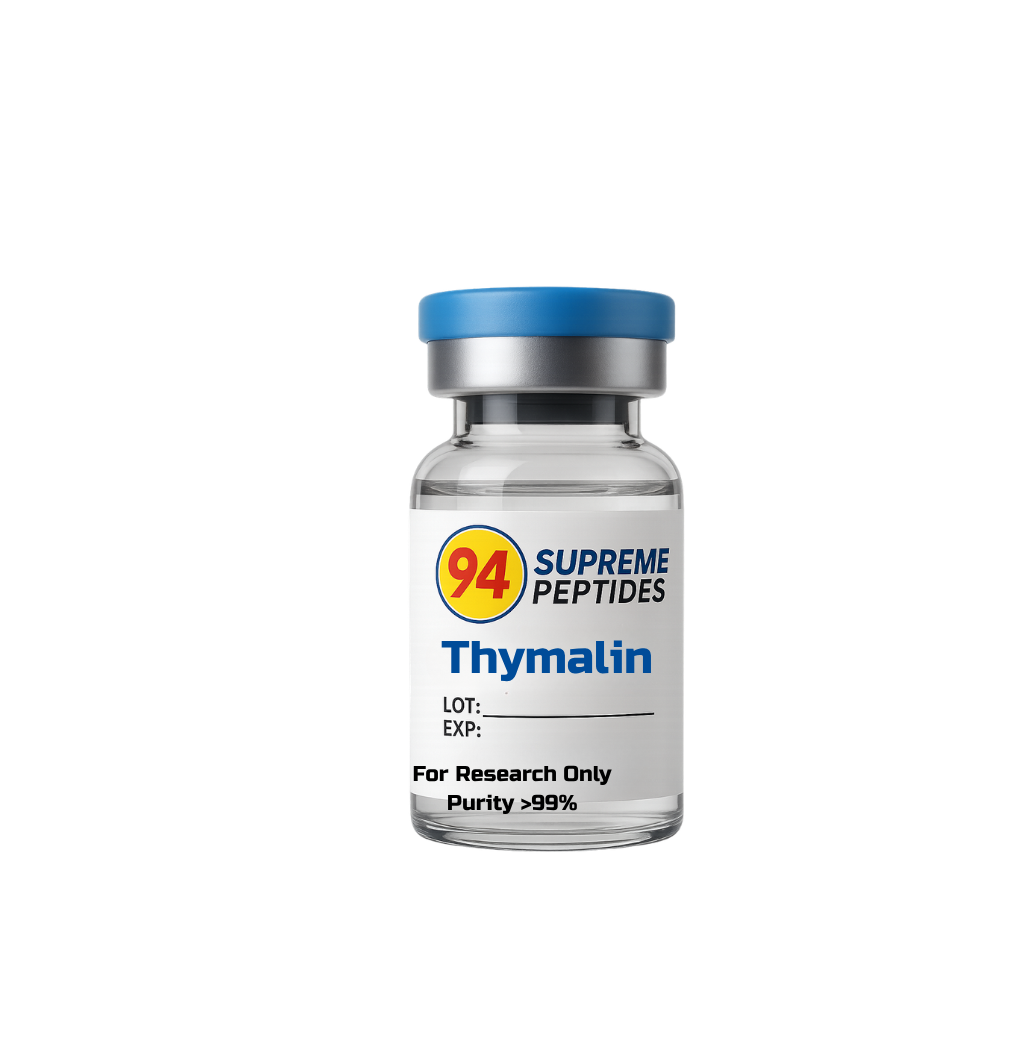
Thymalin
Research use only.
High-purity research-grade Thymalin
Thymalin is a thymic peptide complex widely studied for its role in immune system regulation, cellular regeneration, and immune aging (immunosenescence) research. Derived from thymus gland peptide fractions, it is commonly explored in studies involving immune modulation, inflammation control, and restoration of age-related immune decline.
Product overview
Thymalin is a polypeptide mixture originally isolated from thymus tissue, containing biologically active peptide fractions that influence T-cell maturation and immune signaling pathways. Research involving Thymalin has focused on its ability to regulate immune cell differentiation, enhance thymic function, and support balanced immune responses in experimental models of aging and immune dysfunction.
Key research features
Supports immune system regulation: Studies indicate Thymalin may help modulate T-lymphocyte activity and support balanced immune responses. This has made it a key compound in immunology and immune restoration research.
Immune aging (immunosenescence) research: Research suggests Thymalin may support thymic function and immune resilience in models of age-related immune decline, where T-cell activity and immune responsiveness are reduced.
Inflammation modulation: Thymalin has been investigated for its potential to regulate cytokine balance and reduce excessive inflammatory signaling, contributing to improved immune homeostasis in experimental conditions.
Cellular regeneration and recovery: Early studies indicate Thymalin may influence regenerative processes and cellular repair pathways, making it relevant in broader research on aging, recovery, and systemic resilience.
Thymalin Suggested Use:
Typical Dose: 10–20 mg per day
Route: Intramuscular or subcutaneous injection
Frequency: Once daily
Duration: 5–20 days per cycle, or as recommended by a healthcare professional