
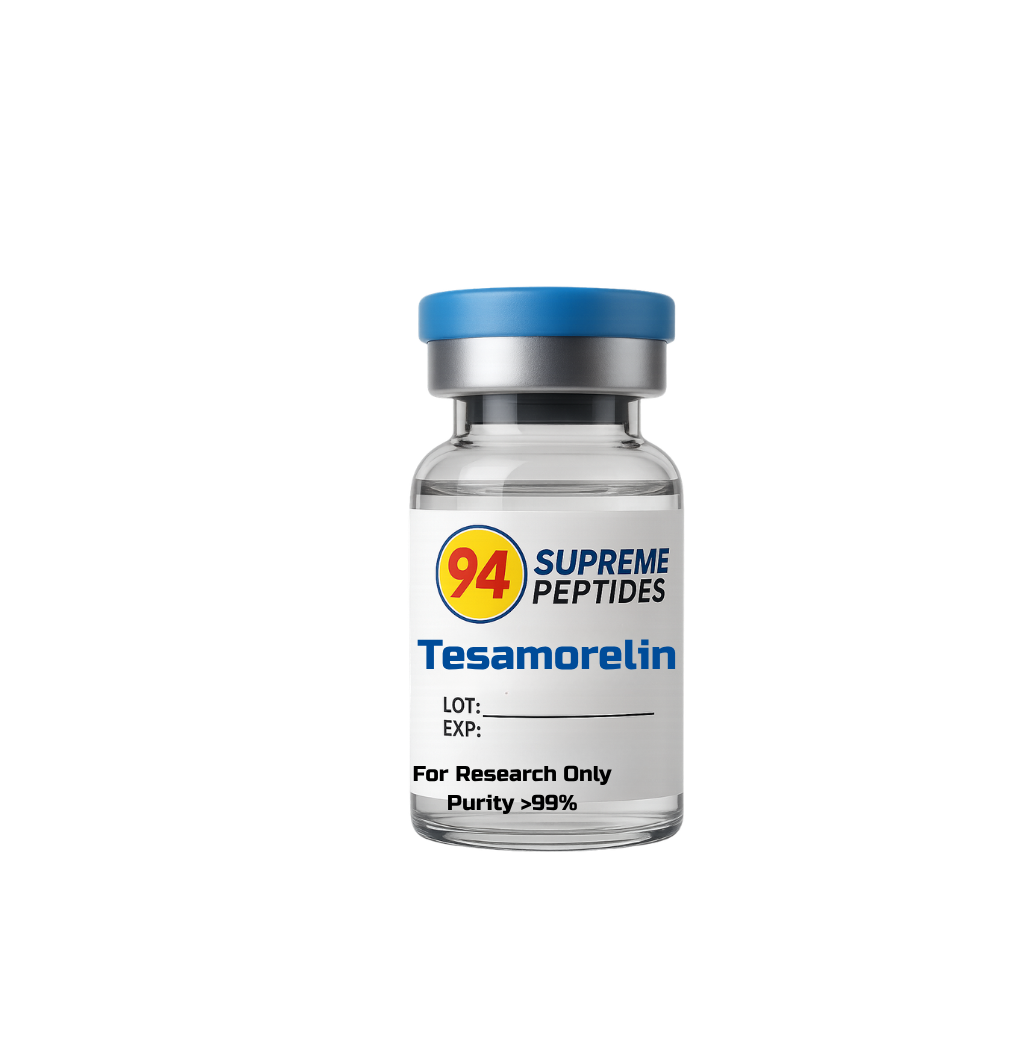
Tesamorelin
Research use only.
High-purity research-grade Tesamorelin
Tesamorelin is a synthetic growth hormone-releasing hormone (GHRH) analog widely studied for its effects on endogenous growth hormone secretion and downstream IGF-1 activity. It is commonly explored in metabolic and endocrine research for its potential role in body composition regulation, visceral adipose tissue reduction, and growth hormone axis modulation.
Product overview
Tesamorelin is a stabilized 44-amino-acid peptide designed to mimic endogenous GHRH while resisting enzymatic degradation, resulting in sustained stimulation of pituitary growth hormone release. Research involving Tesamorelin has focused on its ability to increase circulating GH and IGF-1 levels in a physiological pulsatile pattern. It has been extensively studied in models of lipodystrophy, metabolic dysfunction, and age-related hormonal decline.
Key research features
Supports endogenous growth hormone release: Studies indicate Tesamorelin may significantly increase natural GH secretion, leading to elevated IGF-1 levels and enhanced anabolic signaling. This controlled activation of the GH axis is a central focus of its research applications.
Visceral fat and body composition research: Research suggests Tesamorelin may help reduce visceral adipose tissue while preserving lean body mass. This effect has made it a prominent compound in metabolic and body composition studies, particularly in models of central obesity and lipodystrophy.
Metabolic and lipid regulation: Tesamorelin has been investigated for its potential to improve lipid metabolism, including reductions in triglyceride levels and improvements in overall metabolic profile markers in experimental settings.
Endocrine axis modulation: Early studies indicate Tesamorelin may help normalize growth hormone axis function in models of reduced endogenous GH secretion, making it relevant in age-related endocrine research.
Tesamorelin Suggested Use:
Typical Dose: 1–2 mg per day
Route: Subcutaneous injection
Frequency: Once daily
Duration: 12–26 weeks, or as recommended under supervised research or clinical protocols