
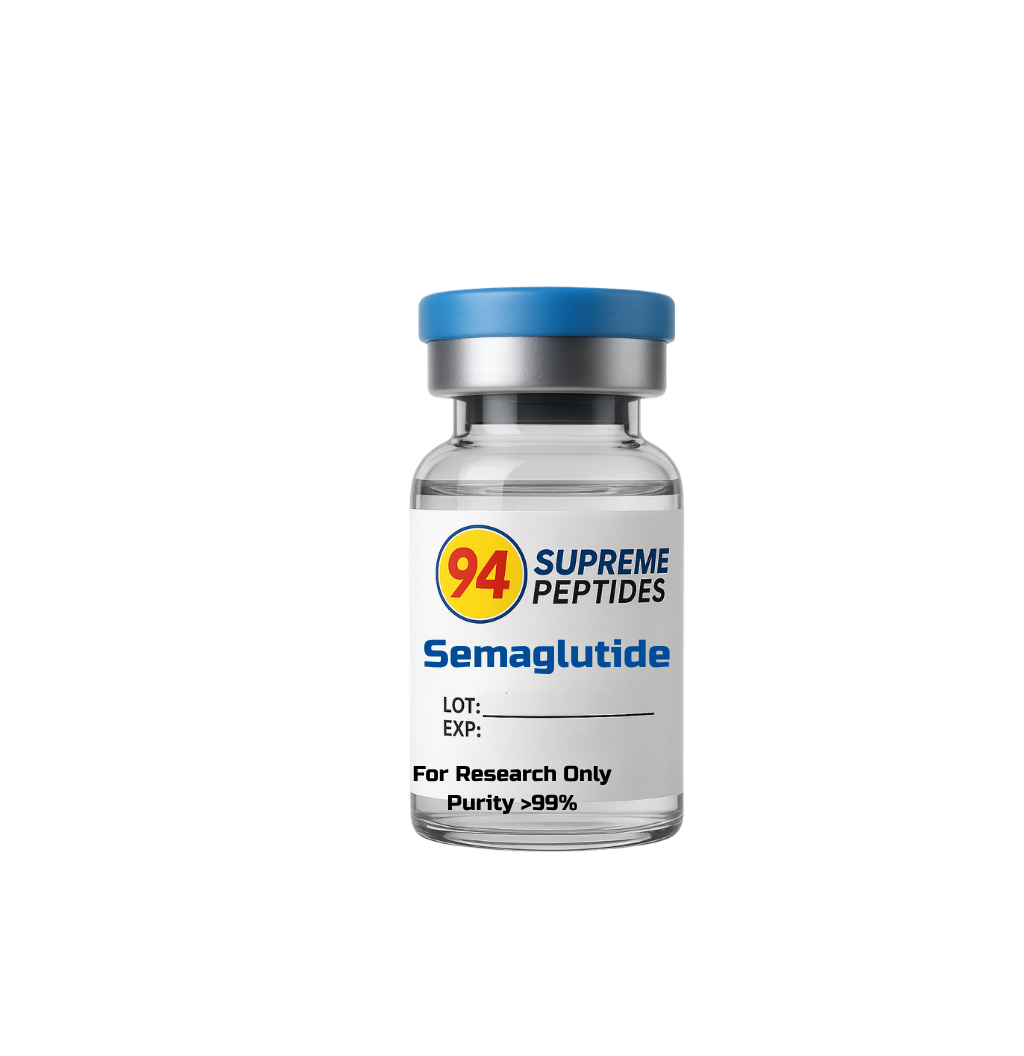
Semaglutide
Research use only.
High-purity research-grade Semaglutide
Semaglutide is a long-acting glucagon-like peptide-1 (GLP-1) receptor agonist widely studied for its role in appetite regulation, glucose metabolism, and body weight management. Originally developed for type 2 diabetes research, it is now extensively explored in metabolic and obesity-related studies due to its effects on satiety signaling, insulin response, and energy intake reduction.
Product overview
Semaglutide is a synthetic peptide analog of GLP-1 designed to resist enzymatic degradation and provide prolonged receptor activation. It works by binding to GLP-1 receptors involved in glucose homeostasis and appetite regulation. Research involving Semaglutide has focused on its ability to enhance insulin secretion in a glucose-dependent manner, reduce glucagon release, slow gastric emptying, and increase satiety signaling through central nervous system pathways.
Key research features
Supports appetite regulation and satiety: Studies indicate Semaglutide significantly reduces appetite and caloric intake by enhancing satiety signaling in the hypothalamus and delaying gastric emptying. These mechanisms have made it one of the most prominent compounds in obesity and weight management research.
Glucose metabolism and insulin response: Research suggests Semaglutide improves glycemic control by enhancing glucose-dependent insulin secretion and suppressing inappropriate glucagon release. This dual action has been widely studied in type 2 diabetes and metabolic syndrome models.
Body weight and composition research: Clinical and preclinical studies indicate Semaglutide may support meaningful reductions in body weight through sustained energy intake reduction and improved metabolic regulation. Its effects on fat mass reduction have been a major focus of modern obesity research.
Cardiometabolic research applications: Semaglutide has also been investigated for potential benefits in cardiovascular risk markers, including effects on blood pressure, lipid profiles, and systemic inflammation in metabolic disease models.
Semaglutide Suggested Use:
Typical Research Range: 0.25–2.4 mg weekly (titration-based protocols)
Route: Subcutaneous injection
Frequency: Once weekly
Duration: 8–20 weeks, or as recommended under supervised research or clinical protocols
Note: Semaglutide is a prescription medication in many jurisdictions and should be used only in appropriate supervised research or clinical contexts.