
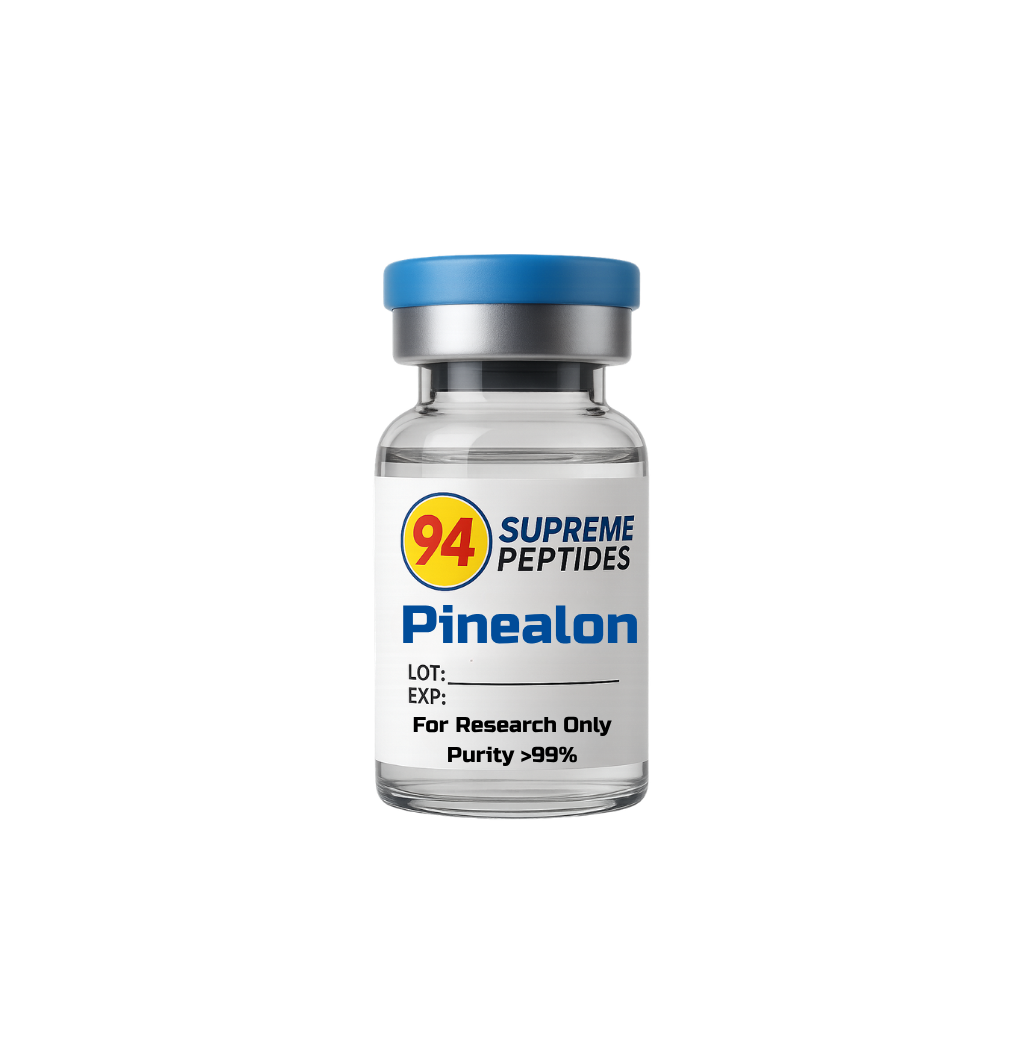
Pinealon
Research use only.
Pinealon is a synthetic tripeptide (Glu-Asp-Arg) widely studied for its role in neuroprotective and regulatory functions within the central nervous system. In research settings, Pinealon has gained attention for its potential involvement in genomic regulation, neuronal resilience, and age-related cognitive decline pathways.
Product overview
Pinealon is a research-grade peptide composed of the amino acid sequence Glu-Asp-Arg, engineered for stability and biological activity. Preclinical research associates Pinealon with modulation of gene expression processes, protection against oxidative stress in neural tissue, and support of cellular adaptation in aging models. Its compact structure makes it a valuable tool for studying fundamental neurobiological and aging-related mechanisms.
Key research features
Neuroprotection and brain aging research:
Pinealon is widely investigated for its ability to support neuronal resilience and reduce stress-induced cellular damage in brain tissue models.
Genomic and cellular regulation:
Studies suggest Pinealon may influence gene expression and protein synthesis pathways, making it relevant in research focused on cellular adaptation and regulation.
Oxidative stress and cognitive pathways:
Research indicates Pinealon may help modulate oxidative stress responses in neural cells, supporting studies of cognitive aging and neurodegenerative processes.
Pinealon – Suggested Use (Research Context)
Typical Dose: 1–3 mg per day
Route: Subcutaneous injection
Frequency: Once daily
Duration: As directed by a qualified professional