
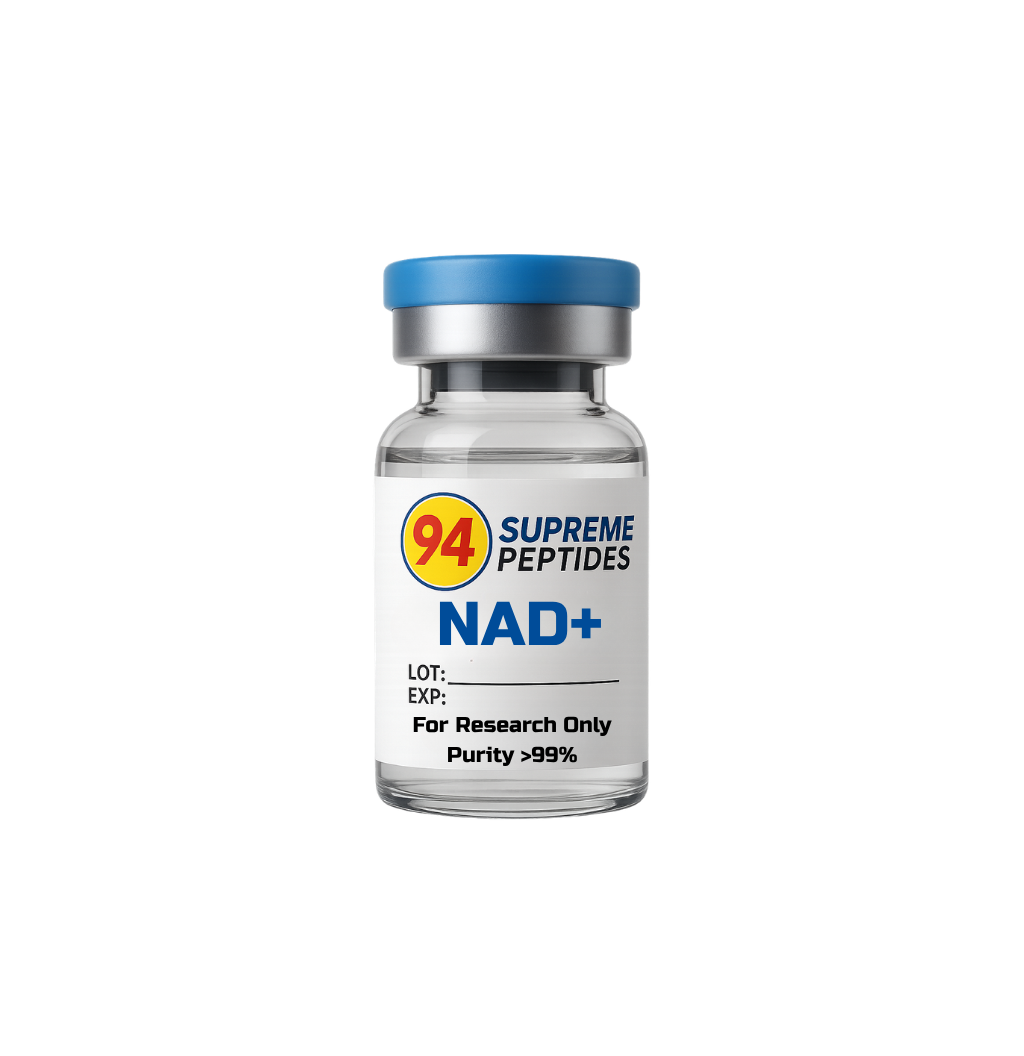
NAD+
Batch #010011 · Research use only.
NAD⁺ (Nicotinamide Adenine Dinucleotide) is a critical coenzyme found in all living cells and is widely studied for its central role in energy metabolism and cellular function. In research settings, NAD⁺ is recognized for its involvement in redox reactions, mitochondrial activity, and regulation of enzymes linked to aging and cellular repair.
Product overview
NAD⁺ is a research-grade coenzyme essential for biological processes including oxidative phosphorylation and ATP production. Preclinical and clinical research associate NAD⁺ with activation of key regulatory enzymes such as sirtuins and PARPs, which are involved in DNA repair, metabolic control, and cellular stress responses. Its foundational role in cellular biology makes it a valuable tool in longevity and metabolic research.
Key research features
Cellular energy and mitochondrial function:
NAD⁺ is fundamental to mitochondrial ATP production and is widely studied for its role in supporting cellular energy metabolism and efficiency.
Longevity and cellular repair pathways:
Research suggests NAD⁺ plays a key role in activating sirtuins and other enzymes associated with DNA repair, genomic stability, and aging-related processes.
Metabolic regulation and redox balance:
Studies indicate NAD⁺ is essential for maintaining redox balance and regulating metabolic pathways, making it highly relevant in research focused on metabolic health and cellular resilience.
NAD+ Suggested Use:
Typical Dose: 100–500 mg per dose
Route: Intramuscular, subcutaneous, or intravenous (depending on application)
Frequency: 1–3 times per week
Duration: 2–6 weeks, or as recommended by a healthcare professional