
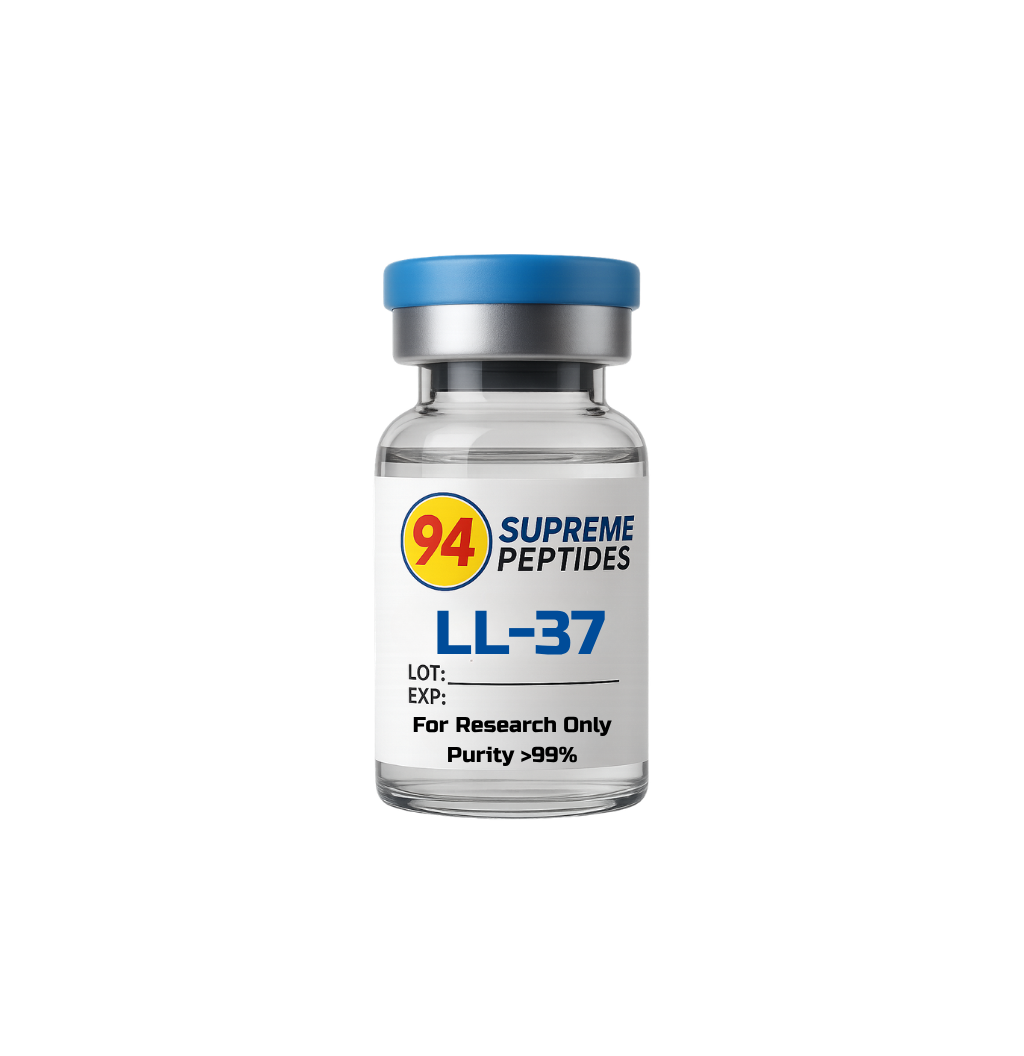
LL-37
Research use only.
LL-37 is a naturally occurring human antimicrobial peptide derived from the cathelicidin family. It is widely studied in research settings for its broad-spectrum antimicrobial properties and its role in modulating immune responses, inflammation, and tissue repair signaling.
Product overview
LL-37 is a research-grade peptide composed of a 37-amino-acid sequence, derived from the human cathelicidin antimicrobial peptide hCAP-18. Preclinical research associates LL-37 with direct antimicrobial activity against bacteria, viruses, and fungi, as well as regulatory effects on immune cell signaling and inflammatory modulation. Its dual role in host defense and immune regulation makes it a valuable tool in immunology and infection-related research.
Key research features
Antimicrobial activity research:
LL-37 is widely investigated for its broad-spectrum antimicrobial effects, including disruption of microbial membranes and inhibition of pathogen growth in experimental models.
Immune modulation and inflammatory pathways:
Studies suggest LL-37 plays a role in regulating cytokine release and immune cell activation, making it relevant for research into inflammation and innate immunity.
Tissue repair and barrier function:
Research indicates LL-37 may contribute to wound healing processes and epithelial barrier protection, supporting studies in regenerative and immune defense biology.
LL-37 – Suggested Use (Research Context)
Typical Dose: 100–300 mcg per day
Route: Subcutaneous injection
Frequency: Once daily
Duration: As directed by a qualified professional