
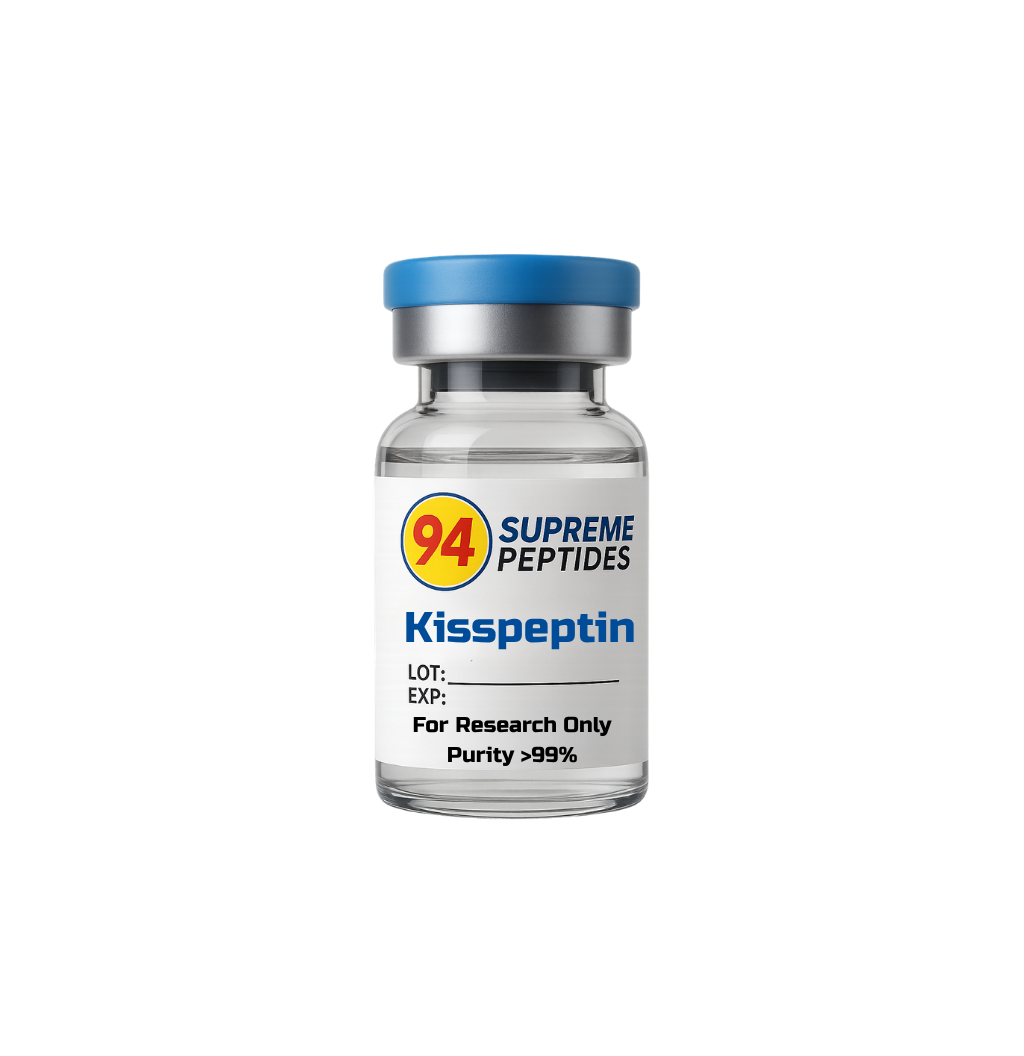
Kisspeptin
Research use only.
High-purity research peptide for laboratory use
Kisspeptin is a naturally occurring neuropeptide widely studied for its critical role in initiating and regulating gonadotropin-releasing hormone (GnRH) secretion. In research settings, Kisspeptin is recognized as a key upstream regulator of reproductive hormone signaling and pubertal development, making it central to studies of fertility and endocrine function.
Product overview
Kisspeptin is a research-grade peptide derived from the KISS1 gene and is engineered for stability and biological activity. Preclinical and clinical research associate Kisspeptin with activation of GnRH neurons and downstream release of luteinizing hormone (LH) and follicle-stimulating hormone (FSH). Its well-defined mechanism makes it a valuable tool for investigating hormonal regulation and neuroendocrine control systems.
Key research features
Neuroendocrine and hormonal signaling:
Kisspeptin is extensively studied for its role in regulating the hypothalamic-pituitary-gonadal (HPG) axis. Research models explore its influence on GnRH pulsatility and endocrine balance.
Reproductive and fertility research:
Studies suggest Kisspeptin plays a critical role in ovulation, spermatogenesis, and overall reproductive function, making it relevant for experimental models of fertility, puberty, and hormonal disorders.
Energy balance and metabolic interactions:
Emerging research indicates Kisspeptin may interact with metabolic and nutritional signaling pathways, supporting its investigation in studies examining the link between energy status and reproductive function.
Kisspeptin Suggested Use:
Typical Dose: 100–200 mcg per injection
Route: Subcutaneous or intramuscular
Frequency: Once daily
Duration: 2–4 weeks, or as recommended by a healthcare professional