
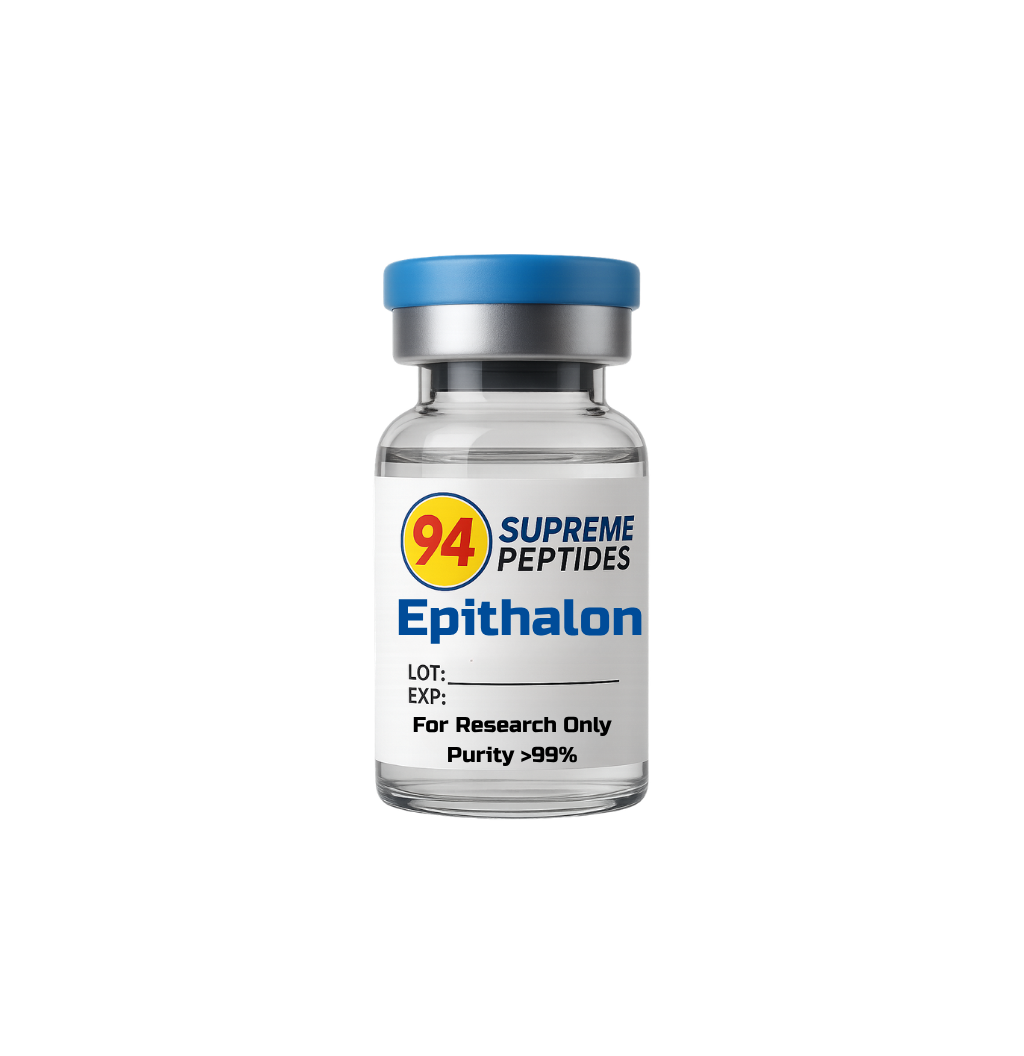
Epithalon
Research use only.
Epithalon (Epitalon) is a synthetic tetrapeptide modeled after a naturally occurring peptide derived from the pineal gland. It is widely studied in research settings for its potential role in telomere regulation, cellular aging processes, and normalization of circadian rhythms, making it a key compound in longevity-focused research.
Product overview
Epithalon is a research-grade peptide composed of the amino acid sequence Ala-Glu-Asp-Gly, engineered for stability and biological activity. Preclinical and clinical research associate Epithalon with activation of telomerase, improved chromosomal stability, and modulation of neuroendocrine signaling related to aging and sleep-wake cycles.
Key research features
Cellular aging and telomere research:
Epithalon is extensively studied for its potential to activate telomerase and support telomere length maintenance. Research models explore its role in cellular lifespan and genomic stability.
Circadian rhythm and sleep biology:
Studies suggest Epithalon may influence melatonin secretion and circadian rhythm regulation, making it relevant in experimental research focused on sleep cycles and biological timing.
Longevity and neuroendocrine signaling:
Research indicates Epithalon may support neuroendocrine balance and cellular resilience, positioning it as a valuable peptide in longevity and age-related research models.
Epithalon – Suggested Use (Research Context)
Typical Dose: 1–5 mg per day
Route: Subcutaneous injection
Frequency: Once daily
Duration: As directed by a qualified professional