
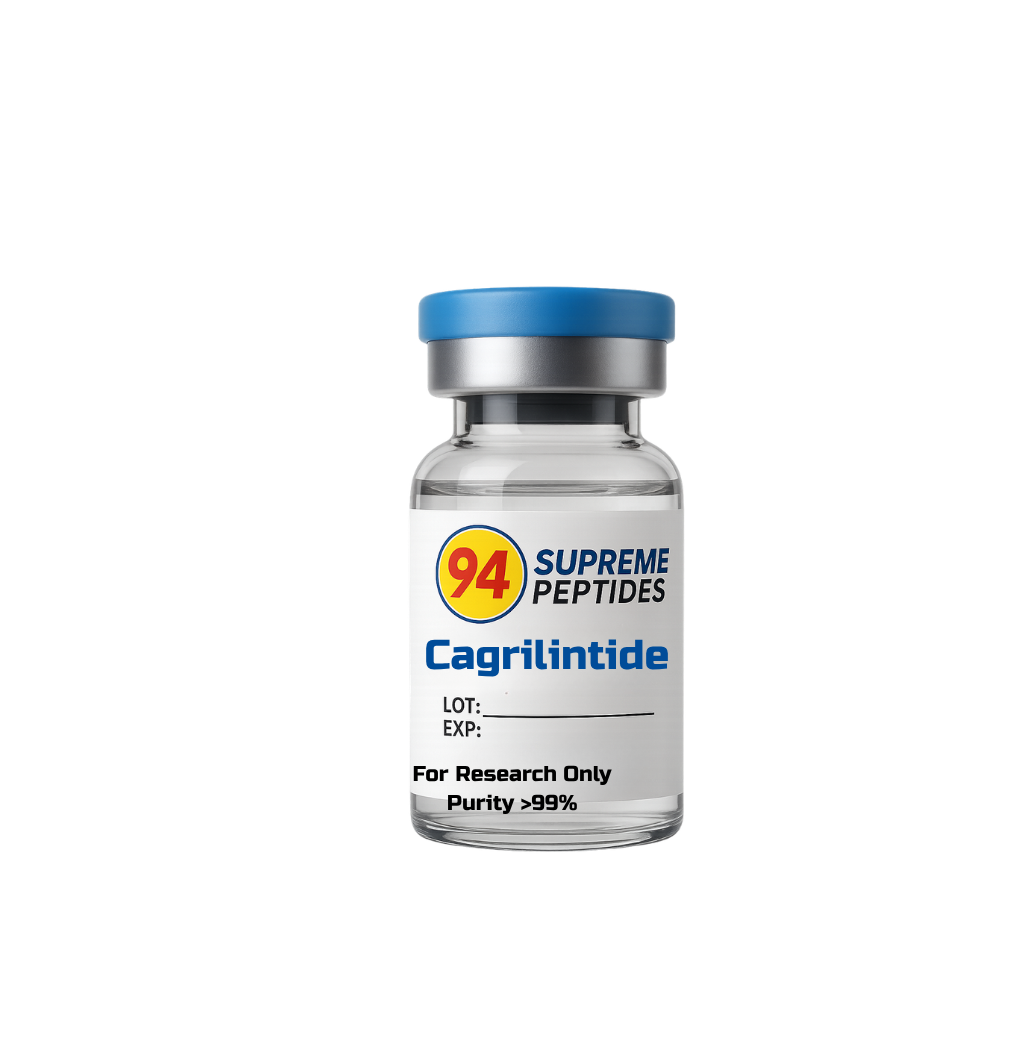
Cagrilintide
Research use only.
High-purity research-grade Cagrilintide
Cagrilintide is a long-acting amylin analogue extensively studied for its potential effects on appetite regulation, metabolic function, and body weight management. As a synthetic peptide designed to mimic the activity of the naturally occurring hormone amylin, Cagrilintide is commonly explored in metabolic and obesity-focused research for its ability to influence satiety signaling, gastric emptying, and energy intake regulation.
Product overview
Cagrilintide is an acylated amylin receptor agonist engineered for prolonged biological activity and enhanced stability. Amylin is a peptide hormone co-secreted with insulin that plays a significant role in appetite control and postprandial glucose regulation. Research investigating Cagrilintide has focused on its potential to reduce caloric intake, improve satiety responses, and support body composition management in experimental metabolic models.
Key research features
Supports appetite regulation: Studies indicate Cagrilintide may significantly enhance feelings of satiety and reduce hunger signaling through activation of central amylin receptors. This mechanism has made it a prominent compound in obesity and weight-management research.
Metabolic and body composition support: Research suggests Cagrilintide may assist in reducing body weight and adipose tissue accumulation by lowering overall energy intake. Experimental models have demonstrated meaningful effects on weight reduction when combined with dietary intervention or GLP-1 receptor agonists.
Glucose regulation research: By slowing gastric emptying and influencing glucoregulatory pathways, Cagrilintide has been investigated for its potential role in improving postprandial glucose control and metabolic efficiency. These properties continue to drive interest in diabetes and metabolic syndrome research applications.
Long-acting peptide stability: Engineered with enhanced pharmacokinetic properties, Cagrilintide is designed for prolonged receptor activity and sustained biological effects. Its extended duration has made it particularly valuable in research evaluating long-term appetite and metabolic regulation.
Cagrilintide Suggested Use:
Typical Dose: 0.3–2.4 mg per week
Route: Subcutaneous injection
Frequency: Once weekly
Duration: 8–16 weeks, or as recommended by a healthcare professional